Thursday, October 17, 2013
Wednesday, October 16, 2013
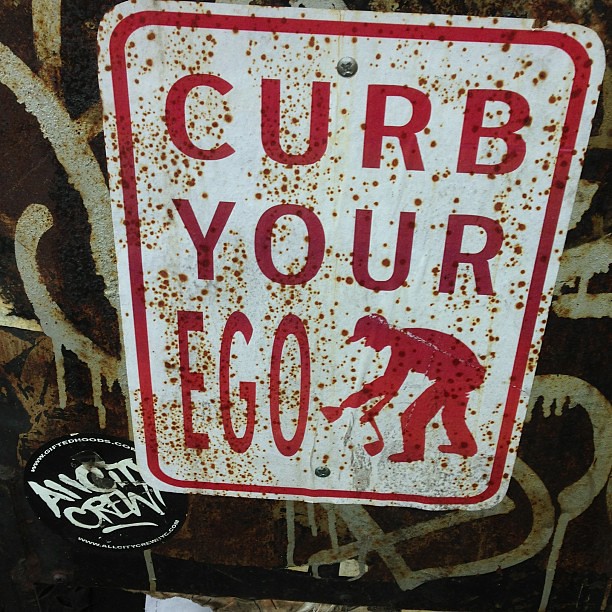
Teaching Without Ego
What would it mean to
TEACH WITHOUT EGO?
Since returning from Lake Qinghai and the grasslands of Tibet. I have been contemplating this idea deeply, using it as a mantra to keep me grounded in a variety of scenarios.
Because, as a teacher, it's amazing how often I bump into my ego. Not to mention the egos of my colleagues. The worst is when you encounter two egos in the hallway duking it out, however politely. You know it's time to back away slowly.
What is "ego"? It is a projection of the self, a self that is separate and different and special from the other selves in this world. It is the source of identity and self esteem. It is the driver of the question, "Who am I?" Its importance is culturally constructed and particularly celebrated in modern America.
It is also divisive and a barrier to compassion. It is at the root of exclusion, indifference, and hate. It breeds insecurity, fear, jealousy, and competition. And as teachers, it can be a detriment to our practice.
There are a good articles on this idea, from teachers of various disciplines:
"...the role of teacher is one in which you gain satisfaction through observing the learning of your pupils."
But it's hard. Because don't we teach who we are? Don't we need to "guide [students] with a strong sense of self?"
The danger is this:
In those moments I am learning not to fight, not to defend, not to protect, not to promote. I am learning to let go. When "I" am at the center of my practice, the world my students and I are creating together feels fragile and destabilized, tilted in the direction of a self-concerned perspective. When my students are at the center of my practice, our world seems infinitely more solid.
In pursuing this idea, I meditate on these questions:
TEACH WITHOUT EGO?
Since returning from Lake Qinghai and the grasslands of Tibet. I have been contemplating this idea deeply, using it as a mantra to keep me grounded in a variety of scenarios.
Because, as a teacher, it's amazing how often I bump into my ego. Not to mention the egos of my colleagues. The worst is when you encounter two egos in the hallway duking it out, however politely. You know it's time to back away slowly.
What is "ego"? It is a projection of the self, a self that is separate and different and special from the other selves in this world. It is the source of identity and self esteem. It is the driver of the question, "Who am I?" Its importance is culturally constructed and particularly celebrated in modern America.
It is also divisive and a barrier to compassion. It is at the root of exclusion, indifference, and hate. It breeds insecurity, fear, jealousy, and competition. And as teachers, it can be a detriment to our practice.
There are a good articles on this idea, from teachers of various disciplines:
"...the role of teacher is one in which you gain satisfaction through observing the learning of your pupils."
But it's hard. Because don't we teach who we are? Don't we need to "guide [students] with a strong sense of self?"
The danger is this:
The ego can exist in two states – one, wherein it is aligned with the higher consciousness and the other, where it is not in alignment with this consciousness.
When the ego is aligned with the higher consciousness, there is just a quiet assertion of the individual self in a particular direction, which it knows intuitively is right for the fulfilment of its life purpose. This assertion is based on love and faith and leads to a harmonious state of goodwill and cooperation for the greater common good. When it is not aligned with the higher consciousness, the ego can really wreak havoc. It can misguide and misinterpret. Propelled by emotions based on fear and insecurity, it can cause action motivated by the desire for applause, attention, getting ahead of competition, reaching the finishing line first, proving one’s superiority over others, etc. Here, the ego is intensely conscious of the other and derives its identity in comparison with the other. The individual self asserts itself purely from the need to create a position of unassailability from which it cannot be dislodged.
When I joined my current school I entered into a team teaching situation that I greatly underestimated for its difficulty. I have come to realize that 99% of any angst I feel at work can be traced back to my ego. Desires to be recognized, respected, and right can be strong. Self-preservation seems sensible and competition seems healthy. A twinge of resentment over a close relationship or individually achieved success seems normal. Suspicion of new colleagues and initiatives seems expected. Giving priority to the activities and topics I prefer seems logical. But when these emotional responses interfere with my ability to focus on what is best for my students and their learning, my ego is the one that needs to back down.
In those moments I am learning not to fight, not to defend, not to protect, not to promote. I am learning to let go. When "I" am at the center of my practice, the world my students and I are creating together feels fragile and destabilized, tilted in the direction of a self-concerned perspective. When my students are at the center of my practice, our world seems infinitely more solid.
In pursuing this idea, I meditate on these questions:
- In what ways does my ego support the development of my teaching practice?
- In what ways does my ego impede the development of my teaching practice?
- In what ways does my ego improve my relationships with students and colleagues?
- In what ways does my ego make relationships with students and colleagues more difficult?
- In what ways can I work with greater compassion?
Tuesday, October 15, 2013
Reflection: Order of Operations and Geography Stories
So one of the deals with this reflective blog business is that I want to make my practice visible and vulnerable. Best to start with today. Beware, extremely detailed lesson talk ahead.
Over the weekend I replanned our geography unit and set up another round of Algebra week for our fourth graders. These are both units that I have loved teaching because the ideas are accessible at many different levels allowing for much differentiation and the information is useful for a variety of tasks in and out of school. There are a lot of fun activities and what we do now will be helpful later on in their studies.
Today I taught a lesson on the order of operations. Now this is truly an idea they will explore extensively in 5th and 6th grade so why bother in 4th? We have a pretty wide range of mathematical abilities, but these beginning algebra lessons have a little something for everyone. They are learning to reason algebraically, recognize and construct equations, and apply basic principles such as balancing values and using inverse operations fluidly, while practicing all sorts of basic operations and reviewing their facts. We talk about working systematically and efficiently. We talk about challenge as a good thing. We are previewing material many students find scary in a fun way with little risk. I don't expect them to master this material. We are just playing around with numbers.
Meanwhile we are asking some deep questions such as:
We will try and keep these lines of inquiry open and reflect on them as we review a variety of topics throughout the year.
The goals for the lesson were:
We started with the equation 18 + 6/3 x 2 and asked them to provide an answer they thought would work. We received mostly 4 and 16 from the students. Teachers then threw out 40, 19, and 22. We discussed why this was happening, tossing around the idea that everyone was starting in their own place and following their own path. I presented the idea of an order of operations that mathematicians had agreed upon. Then we played hopscotch and learned a rhyme to go with how we might solve an equation: Parentheses, Exponents, Multiplication or Division Left to Right, Addition or Subtraction Left to Right.
Students then practiced on 3 more equations with partners, looking for the most accurate answer. They encountered parentheses and exponents and I explained how those worked. They had questions about how the order of operations might work within a pair of parentheses. They wondered about whether to do multiplication or division first and I reinforced the idea of them being equal so we just go left to right. We found instances where the answer wasn't dependent on the order of operations, but recognized it was important to not assume that would always be the case. I am leaving the PEMDAS vs. GEMS debate to the middle school and did not introduce those terms at all.
Over the weekend I replanned our geography unit and set up another round of Algebra week for our fourth graders. These are both units that I have loved teaching because the ideas are accessible at many different levels allowing for much differentiation and the information is useful for a variety of tasks in and out of school. There are a lot of fun activities and what we do now will be helpful later on in their studies.
Today I taught a lesson on the order of operations. Now this is truly an idea they will explore extensively in 5th and 6th grade so why bother in 4th? We have a pretty wide range of mathematical abilities, but these beginning algebra lessons have a little something for everyone. They are learning to reason algebraically, recognize and construct equations, and apply basic principles such as balancing values and using inverse operations fluidly, while practicing all sorts of basic operations and reviewing their facts. We talk about working systematically and efficiently. We talk about challenge as a good thing. We are previewing material many students find scary in a fun way with little risk. I don't expect them to master this material. We are just playing around with numbers.
Meanwhile we are asking some deep questions such as:
We will try and keep these lines of inquiry open and reflect on them as we review a variety of topics throughout the year.
The goals for the lesson were:
- To introduce the order of operations
- To practice writing equations that reflect our thought processes
- To apply memorized math facts in a novel situation
We started with the equation 18 + 6/3 x 2 and asked them to provide an answer they thought would work. We received mostly 4 and 16 from the students. Teachers then threw out 40, 19, and 22. We discussed why this was happening, tossing around the idea that everyone was starting in their own place and following their own path. I presented the idea of an order of operations that mathematicians had agreed upon. Then we played hopscotch and learned a rhyme to go with how we might solve an equation: Parentheses, Exponents, Multiplication or Division Left to Right, Addition or Subtraction Left to Right.Students then practiced on 3 more equations with partners, looking for the most accurate answer. They encountered parentheses and exponents and I explained how those worked. They had questions about how the order of operations might work within a pair of parentheses. They wondered about whether to do multiplication or division first and I reinforced the idea of them being equal so we just go left to right. We found instances where the answer wasn't dependent on the order of operations, but recognized it was important to not assume that would always be the case. I am leaving the PEMDAS vs. GEMS debate to the middle school and did not introduce those terms at all.
Then I gave students the four 5's problem. I had made cards with the 4 operation symbols, a pair of paratheses, four 5s, and an equal sign (which I had forgotten but they asked for).
I asked them to make as many equations as they could and find out how many different answers they could get. I had found two versions of this activity and was trying to simplify one and make another more open ended. I realized from their questions that I had taken away some of the structures that made the problem particularly challenging and interesting. I had also not predicted and prepared contingencies for some of the directions they would go. Were they allowed to make numbers like 55? Did the answer have to be 5? Did they have to use all of the cards? What if they wanted to repeat an operation, but didn't have another card with that sign? Could they make exponents? Now I am pretty flexible and was mostly interested in watching them work it out:
It all went fine. There were some thoughtful equations and some ripe for refinement. Overall, I could see the benefit in going back to the original problems the way that they were presented, which should probably be the next step. Instead of exploring the open range of equations (with no self checking mechanism) we can move towards puzzler models, uncovering equations that will allow us to get to 10 or 125 or 24.
I asked them to make as many equations as they could and find out how many different answers they could get. I had found two versions of this activity and was trying to simplify one and make another more open ended. I realized from their questions that I had taken away some of the structures that made the problem particularly challenging and interesting. I had also not predicted and prepared contingencies for some of the directions they would go. Were they allowed to make numbers like 55? Did the answer have to be 5? Did they have to use all of the cards? What if they wanted to repeat an operation, but didn't have another card with that sign? Could they make exponents? Now I am pretty flexible and was mostly interested in watching them work it out:
It all went fine. There were some thoughtful equations and some ripe for refinement. Overall, I could see the benefit in going back to the original problems the way that they were presented, which should probably be the next step. Instead of exploring the open range of equations (with no self checking mechanism) we can move towards puzzler models, uncovering equations that will allow us to get to 10 or 125 or 24.
My writing lesson got smooshed between an art project and lunch. As part of our geography unit we are going to write geography stories about places and geographical features that are meaningful to us. I had prepared a pre writing activity, but after a vibrant work period involving watercolors, interspersed with PE and an emergency drill, I was left with only enough time to present the idea and then give it out for homework. Ideally we could have brainstormed in class, began the pre-writing activity, and shared our work. This didn't happen. We will see the consequences of this on Thursday.
It may be that I get away with it, or that we will need to compensate with more coaching on the back end. It's something I know I could have taught better and will teach better next time. I am comforted by the fact that I am not the first teacher to run out of time or to sacrifice a darling for a greater cause. Nor am I the last. It's an occupational hazard. Luckily, we all come back tomorrow and the project will live to see another day.
Monday, October 14, 2013
Winter Is Coming...
and soon it will be time to stay inside, bundled up in sweats with cups of cocoa. What will I do as the cold months descend upon us?
A) Reread the entire Song of Fire of Ice series.
B) Cook my husband dinner every night.
C) Start a new, more comprehensive, more reflective blog
If you guessed A, you are tripping. I finished those books last winter and I am not reading them again. I am saving my energy for the 6th book or the devastating news that George R.R. Martin has died without finishing this story and we will never know who ascends the Iron Throne.
If you guessed B, you are either my husband, a friend of my husband, or someone else's hungry husband.
If you guessed C, you are right and very perceptive as you happen to be reading said blog right now.
This is not my first blog. No, I've been around the blogging block. I blog here about our 1:1 iPad program. I blog here about my trips to China. Here you can find my amateur poems. I kind of blog a lot, but I have become convinced I should blog even MORE. By whom? Steve Wheeler. He gives seven reasons teachers should blog. And it's all about reflecting on our practice in order to better serve our students.
That gets me every time.
This month is Connected Educator Month and there are lots of events both live and online to help teachers use technology for good. But Justin Baeder made a great point that if your connectedness isn't helping your students, who cares. Your students don't need you to be a Twitter star. Get back in the classroom and teach. Or plan. Or assess. Or blog. Because apparently by blogging, I can become a better teacher. Or so I hope.
Our technology coordinator keeps quoting John Dewey:
“We do not learn from experience...we learn from reflecting on experience.”
However, this blog isn't for you. It's not even for me. It's for my students. And if being connected is all it's cracked up to be, it'll be for your students too.
A) Reread the entire Song of Fire of Ice series.
B) Cook my husband dinner every night.
C) Start a new, more comprehensive, more reflective blog
If you guessed A, you are tripping. I finished those books last winter and I am not reading them again. I am saving my energy for the 6th book or the devastating news that George R.R. Martin has died without finishing this story and we will never know who ascends the Iron Throne.
If you guessed B, you are either my husband, a friend of my husband, or someone else's hungry husband.
If you guessed C, you are right and very perceptive as you happen to be reading said blog right now.
This is not my first blog. No, I've been around the blogging block. I blog here about our 1:1 iPad program. I blog here about my trips to China. Here you can find my amateur poems. I kind of blog a lot, but I have become convinced I should blog even MORE. By whom? Steve Wheeler. He gives seven reasons teachers should blog. And it's all about reflecting on our practice in order to better serve our students.
That gets me every time.
This month is Connected Educator Month and there are lots of events both live and online to help teachers use technology for good. But Justin Baeder made a great point that if your connectedness isn't helping your students, who cares. Your students don't need you to be a Twitter star. Get back in the classroom and teach. Or plan. Or assess. Or blog. Because apparently by blogging, I can become a better teacher. Or so I hope.
Our technology coordinator keeps quoting John Dewey:
“We do not learn from experience...we learn from reflecting on experience.”
Guess it's time to dive in.
However, this blog isn't for you. It's not even for me. It's for my students. And if being connected is all it's cracked up to be, it'll be for your students too.
Subscribe to:
Posts (Atom)


.jpg)